Pan-Africanism part 3: Neo-Colonialism as an Institution - Françafrique and Congo
Introduction
In Part 2 we examined the rapid granting of ‘Independence’ to African by the two major colonial powers in Africa, Britain and France plus the horrific and continuing story of Congo, colonised by the Belgians.
In Part 3 we will examine the institutionalisation of neo-colonialism. By the late 1950s, in response to armed struggles in Algeria against the French and Kenya against the British, the two main colonial powers, Britain and France decided on the policy of neo-colonialism to defend their economic interests.
Belgium, in control of the massive, resource-rich Congo, followed suit, and in 1960, when the first democratically elected Prime Minister, Patrice Lumumba showed signs of not wanting to follow the interests of the mining corporations, the Belgians with the assistance of the USA and the United Nations Secretariat, removed him from power and murdered him.
Françafrique
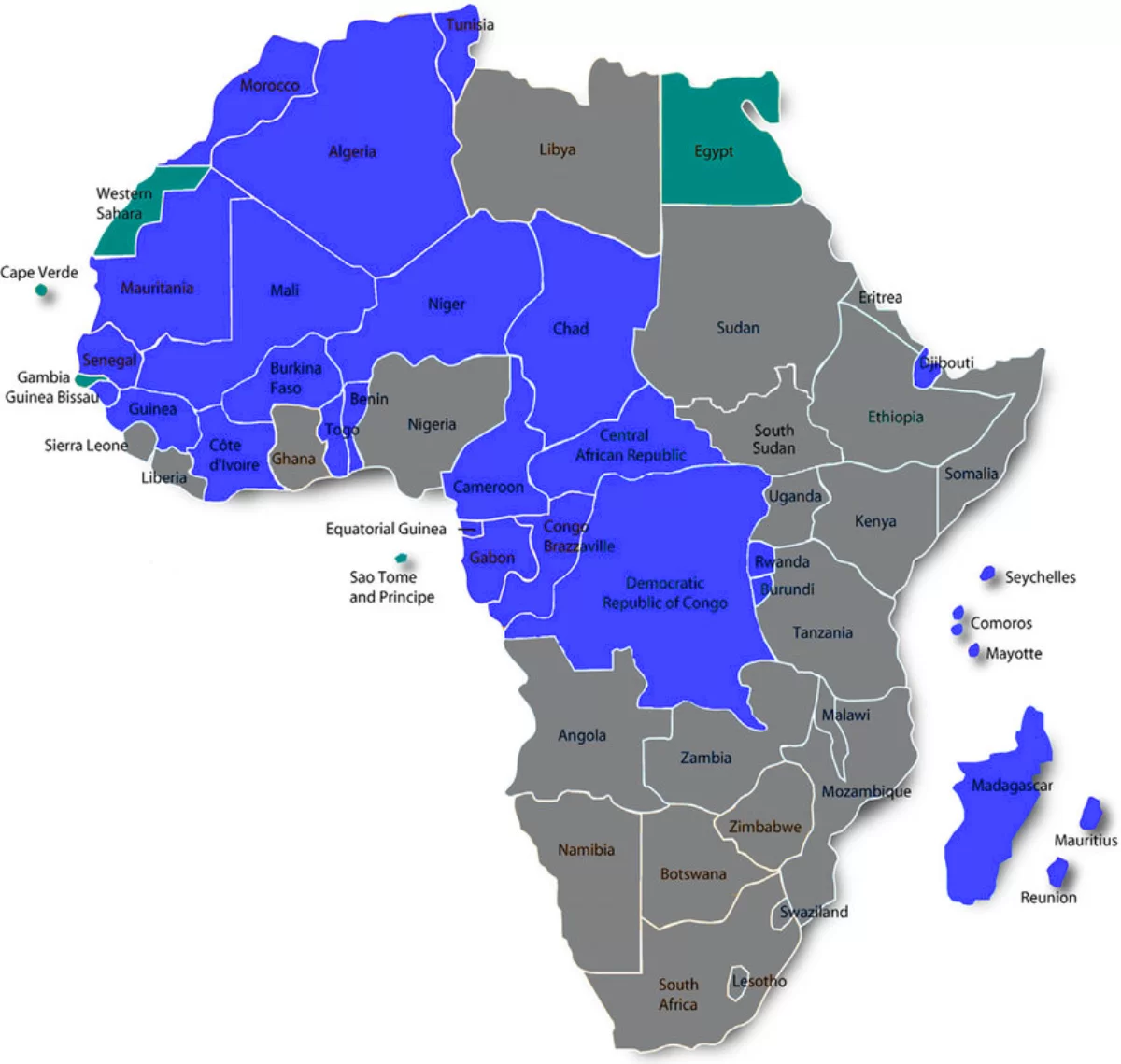
The French neo-colonial model, which became known as ‘Françafrique’ relegated the ‘Presidents’ of the newly ‘independent’ states of former French West Africa and French Equatorial Africa to little more than colonial governors. Algeria by 1950 was regarded by the French government, not as a colony but as part of France. There were rather over 1 million French citizens as opposed to 9 million native Algerians ― but native Algerians had no vote, no rights. They were a subject people. In 1954, the National Liberation Front (FLN) started armed struggle.
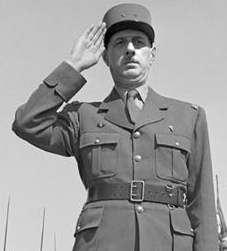
Containing the armed struggle in Algeria became very expensive for France and in 1958, as a result of internal turmoil in which the expense of the Algerian war was a major factor, General Charles de Gaulle became leader of France through a kind of internal coup. De Gaulle had been the leader of the Free French Forces which had fought Nazi Germany alongside the Western allies during the Second World War.
De Gaulle realised that the Algerian War was unwinnable for France. Despite massive opposition which included several assassination attempts from a section of the French Army aligned to the white settlers in Algeria, de Gaulle negotiated for Algerian independence. In 1962, Algerian independence was achieved, but an understanding, from the point of view of French imperialism, of the problems which created the Algerian War, persuaded de Gaulle to introduce a programme which would ensure French control of African resources elsewhere for some years to come.
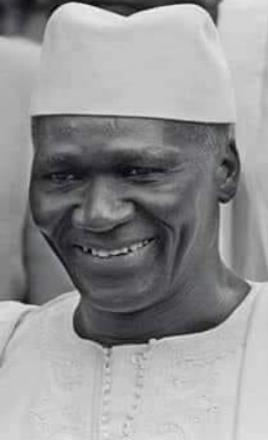
In late 1958 the French Community was established in order to give limited sovereignty to French colonies, especially those in Africa while France retained control of minerals. African countries were given the option of joining the French Community and preparing for independence in 1960-1961, or accepting immediate independence. The only French-ruled African country which opted for immediate independence was Guinea led by Ahmed Sékou Touré; this provided the French government an opportunity to make an example of any country which did not bow to its will.
Leaving Guinea very quickly, the French removed all the money in government bank accounts, removed or destroyed all records and physically destroyed or sabotaged all infrastructure. Skilled and experienced French management was ordered to return to France.
The conditions for any African country becoming part of the French Community were:
- The CFA franc to be the currency of all former French colonies in Africa south of the Sahara. Today there is both a West African version and a Central African version of the CFA franc.
- French Community countries had to keep 50% of their foreign currency reserves in the French Treasury, plus an additional 20% for financial liabilities. Thus, member states only retained 30% of reserves within their borders. No country could borrow more than 15% from the reserve in any one year.
- France had the right of first refusal on any raw or natural resource discovered in any French Community country.
- French companies had the first right to take any government contract in any French Community country.
- No country in the French Community was allowed military assistance from any country other than France without French permission.
- France had the exclusive right to supply military equipment and train military officers any French Community country.France had the right to station troops and intervene in any French Community country.
In practice it is generally agreed that in all countries which accepted these rules, through various mechanisms, the countries involved would receive no more than 15% of the revenue generated while France receives 85%
The French Parliament officially scrapped the French Community in 1995, but for most of these ‘former’ colonies, these same rules still apply! France has also controlled elections and recently real democracy has come through progressive coups rather than the French-controlled ballot box; right now we see France blocking a progressive coup in Benin using the Nigerian army as its proxy. This coup has been called ‘undemocratic’ by the West and ECOWAS, the Economic Community of West African States, and the African Union (AU), yet recently, obviously fraudulent elections have been held in Côte d’Ivoire and Cameroun have been accepted by these bodies.
In terms of the pan-African agenda, the Organisation of African Unity (OAU) formed in 1963 with enormous optimism became the African Union in 2002 under the influence of Libyan leader Muammar Gaddafi. Gaddafi had hoped to form an African equivalent to the European Union (EU) with its own currency, the gold dinar. It was for this reason, French President Nicolas Sarkozy, fearing the end of the CFA franc, persuaded Prime Minister David Cameron of UK and President Barack Obama of the USA to bomb Libya and murder Muammar Gaddafi using NATO backed by jihadist fighters on the ground.
Those jihadists used against Libya have now filtered south to the Sahel states and are known as Jama’at Nusrat al-Islam wal-Muslimin (JNIM). Like the jihadists in Libya, they are linked to al-Qaeda and the West and have been trained by Ukrainian government forces. The notorious Boko Haram in Nigeria and JNIM have links with each other and to Western funders.
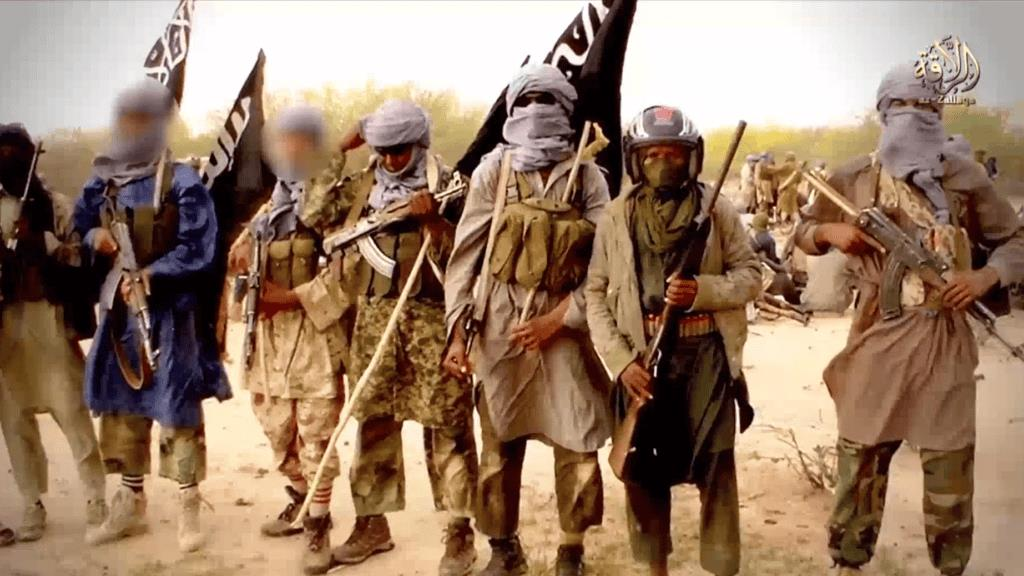
Within the AU, France had, and still maintains, a block vote through the governments under its control. The AU failed to protect its main founder, Muammar Gaddafi and continues to support fraudulent elections controlled by imperialist intelligence organisations. Formed by pan-Africanists like Kwame Nkrumah as the OAU in 1963, the AU has become the opposite of what its founders intended. It has become an organ of imperialist control in Africa.
The USA takes an Interest in Africa
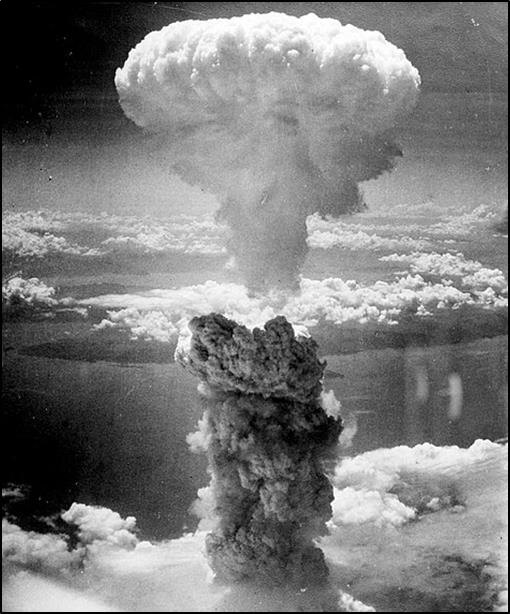
Before the Second World War, the USA took little interest in Africa. Liberia, a US semi-colony formed by released former US slaves in 1846 was their only permanent interest. But the building of the atom bombs which hit Hiroshima and Nagasaki during the Second World War were made from uranium mined in Congo.
In the late 1950s, Britain and France reached consensus on the need for the neo-colonial agenda throughout the African continent. They were supported in this by the USA, which was ever mindful of the dangers to Western dominance posed by the fact that the growing pan-African movement was interested in communism and had links with the USSR and China ― and later with Cuba. Black militants in the USA were drawn towards pan-Africanism, however, the unstated policy of the US ruling class was incorporation of the Black minority into the mainstream of US politics and administration.
It should here be noted that the greatest amount of civil rights legislation in the USA was carried out by the Lyndon Johnson administration which, simultaneously, in the mid-1960s recruited white mercenaries to go to Congo to put down the growing resistance by the Simba rebels.
This seeming paradox is not difficult to explain. Segregation in the USA, especially the southern states was in contradiction to the image that they wanted to display to the world as the ‘defenders of democracy and human rights’. More so, it was the era of both the Cold War and an increasing number of countries in Africa and Asia gaining independence. Many of those countries were drawn towards communist ideas. Therefore, it was necessary to end segregation and draw black Americans into the system; but outside US borders, economic control of resources had to be maintained.
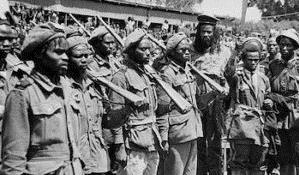
Following the murder of Patrice Lumumba, the Lumumbist Simba rebels, were threatening to overthrow the weak US-sponsored regime of President Joseph Kasa-Vubu and Prime Minister Moise Tshombe. Tshombe had previously been sponsored by the Belgian mining company Union Minière to be president of the mineral-rich break-away province of Katanga and had employed white mercenaries there. The Simbas though undisciplined were feared by the official Congolese army and were making significant advances ― until the intervention by the ruthless but disciplined mercenary force led by British Colonel ‘Mad Mike’ Hoare.
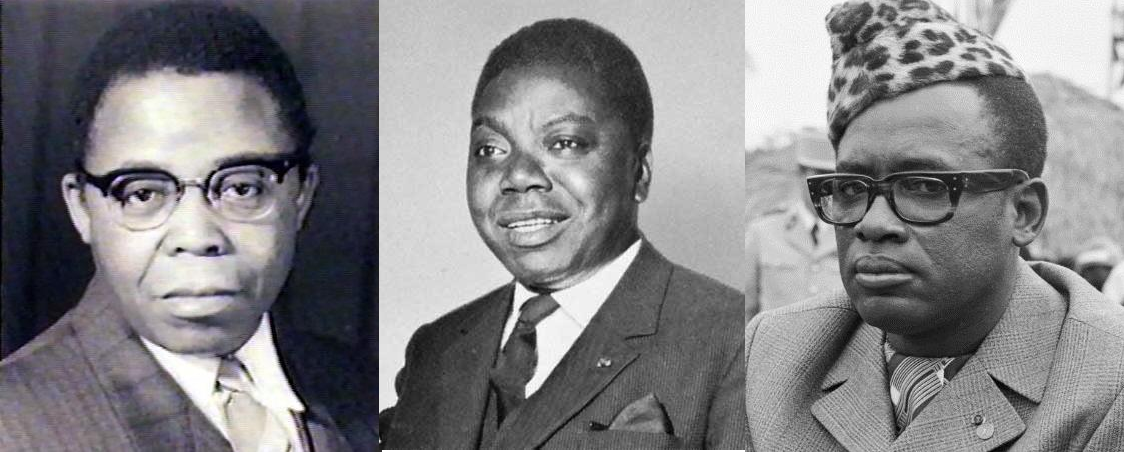
Hoare and his mercenaries arrived in Congo in July 1964 but the main push against the Simbas began in November 1964 when they took Stanleyville (now Kisangani). In April 1965, a group of Cuban soldiers led by Che Guevara was sent to eastern Congo to assist the Simbas. In his book, Congo Mercenary, Hoare relates how resistance suddenly stiffened after the Cubans arrived; however it was too little, too late. The Simbas were not only undisciplined, but prior to Cuban assistance and training, they did not even know how to aim and fire their rifles! The group that Che was working with were under the leadership of Laurent Kabila who in 1996 was to become President of Congo. By November 1965, the Cubans were forced to leave as the Simbas were defeated.
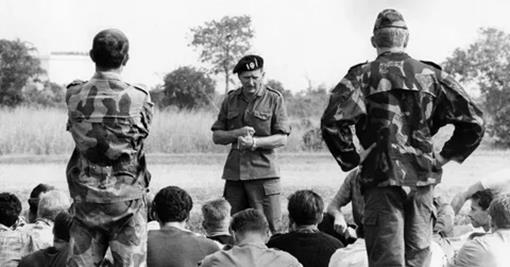
Moise Tshombe was hated for his use of white mercenaries who would massacre whole villages if the felt like it. In October 1965 he was removed as Prime Minister by President Kasa-Vubu and replaced by Évariste Kimba. In 1967, Tshombe’s plane was hi-jacked and he was taken to Algeria where he died under house arrest in 1969. For many years after his death, to call someone in Africa a ‘Tshombe’ was to call him a ‘sell-out’.
In November 1965, Joseph Mobutu, Congolese army commander, organised a coup against President Kasa-Vubu and Prime Minister Kimba. Mobutu declared himself President without any Prime Minister and later renamed himself ‘Mobutu Sese Seko’ and his country ‘Zaire’. Joseph Kasa-Vubu retired to his farm where he died in 1969, but Évariste Kimba and 3 other politicians were publicly hanged on Mobutu’s orders in 1966.
Mobutu ruled Zaire until 1997, utterly ruthless to his people, allowed mining companies to do as they pleased, so long as he had his share of the profits. There were uprisings against him which were soon put down by Belgian and French troops. By 1997, Mobutu who had a palace in every province of Zaire, was spending most of his time in Europe and was dying of cancer. Over the years, Laurent Kabila had established links with Paul Kagame of Rwanda and Yoweri Museveni of Uganda whom he regarded as fellow revolutionaries. By the late 1990s the USA was looking for another strongman to guard their interests in Congo.
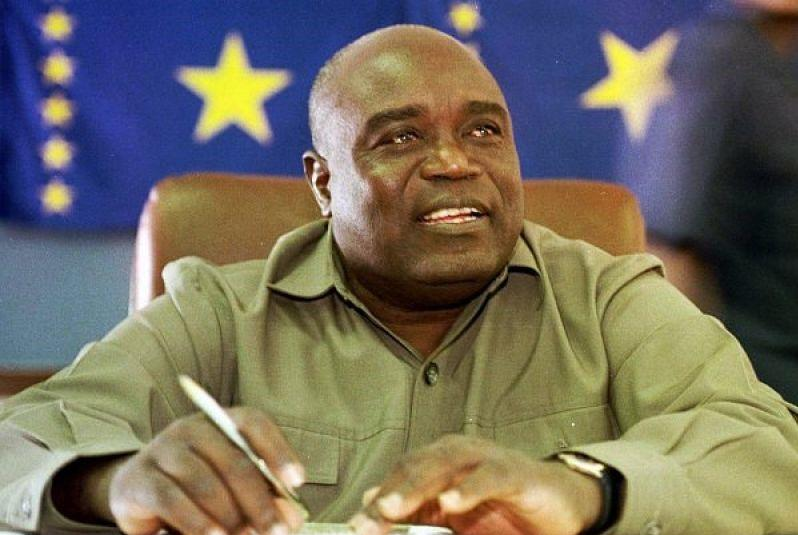
Laurent Kabila came to power in 1997 with the backing of mainly Tutsi forces from Rwanda and Uganda and the USA behind the scenes. He already had his own base in South Kivu Province bordering Rwanda Burundi and Tanzania. On 17th May 1997. Laurent Kabila became President of the Democratic Republic of Congo (DRC). The name Zaire, given by Mobutu, was dropped.
However Laurent Kabila did not do what his original backers wanted him to do. He made a statement saying that all foreign mining companies must have their contracts re-negotiated so that they paid money back into Congo for development. The Belgian Communist Ludo Martens served as an advisor to Laurent Kabila; Martens became an important historian for Congo, although most of his writings are in French. This influence was not welcomed by the USA.
US President Bill Clinton then armed Uganda and Rwanda to invade Congo using the latest US weapons in August 1998, Burundi played a lesser role. Not only was the USA displeased with Kabila, Rwandese forces which had helped him to power refused to leave the country and were extensively engaged in looting and controlled much of the minerals of eastern Congo.
The USA was at that time also unhappy about the pro-Communist MPLA (People’s Movement for the Liberation of Angola). It had long been supporting UNITA (Union for the Total Independence of Angola) led by Jonas Savimbi and was hoping to put Savimbi in power. During the invasion of Congo, UNITA forces worked with the invaders. During this war, the biggest battle was not in Congo, but in Cabinda, the oil-rich enclave of Angola, north of the Congo River which produced at least half of Angola’s total revenue.
The Congo at War
Congo was in the process of joining SADC (Southern Africa Development Conference) at the time of the invasion, Zimbabwean President Robert Mugabe was at that time SADC Chairman and immediately gave support, Angola understanding the danger gave support immediately as did Namibia, the SWAPO (South West Africa People’s Organisation) army had often been under attack from UNITA during the time that they were using Angola as rear base. To the north, Chad supported Congo as did Sudan during part of the war period.
In 2001, Laurent Kabila was gunned down by one of his own bodyguards who was killed immediately after the shooting. Correspondence between the killer and the US Military Attache was found among the killer’s belongings. The son of Laurent Kabila, Joseph Kabila, a young man of 29 was immediately made President in his father’s place but did not have his father’s vision.
This became the biggest war EVER on African territory, UN figures claim that 5.4 million people died in the conflict (mainly through starvation and disease), which, if the figure is correct, makes it the biggest war in casualty figures since World War II. But this war was hardly reported. Prior to this war, Robert Mugabe had been seen as an ally of Western imperialism, being favoured since Zimbabwe Independence in 1980. In 1999, the IMF and World Bank pulled out support for Zimbabwe quoting the cost of the Congo War while still funding the aggressor nations, Uganda and Rwanda, thus the sanctions against Zimbabwe started in 1999, not in 2001 when War Veterans occupied white-owned farms as is normally assumed.
The Zimbabwe National Army went on to play a major role in stopping the invading forces. The biggest battle of the war was in Cabinda, the oil-rich enclave of Angola north of the Congo River which at that time supplied half of the revenue of Angola. The history of Congo is the ugliest on the whole African continent. It is the richest in natural resources and the Congolese people have been made to suffer because of those resources.
Rwanda under Paul Kagame has not stopped raiding Congo. It has become a major exporter of coltan, a mineral not found in Rwanda. Much has been in the news about ‘M23 rebels’. M23 is not a rebel organisation, it is a mercenary formation mainly composed of Rwandese soldiers. Recently President Trump was asked for help by against M23 by the weak Congolese President Tshisekedi. A ‘peace deal was made between Congo and Rwanda. But little has changed. Looting continues and so does fighting. The history of Congo, especially recent history is hardly known outside Africa ― and sparsely known even within Africa, yet the DRC is the richest in natural resources especially rare minerals used for the aeronautic and arms industry. Most of the coltan used in our cellphones is from here and the country is geographically central.
Africa can never be free until Congo is free!
In Part 4 we will look at the armed struggles in southern Africa
Ian Beddowes, Editor